




Treatments and Technology
Gracefully manage and work toward recovery from neurological conditions. Whether you have frequent headaches, memory issues, movement difficulties or you’re recovering from a stroke, our expert team provides the care you need. From advanced imaging and diagnostic tools to targeted therapies and procedures, our team uses the latest technology and treatments to care for your brain and nervous system. Personalized treatments at Willis Knighton help you feel better, improve your quality of life and support your long-term health.
EEG – Electroencephalography
This test measures the electrical activity of your brain to help doctors understand how it’s functioning. Small metal discs called electrodes are gently placed on your scalp to record your brain’s electrical impulses. These impulses create a computerized printout that your neurologist analyzes to find what may be causing your symptoms. This noninvasive test is a safe and comfortable way to gather information about your brain health.
Learn more about EEG – Electroencephalography
EMG – Electromyography
This test looks at how your muscles and the nerves that control them are working. A small, thin needle with an electrode is gently placed into your muscle to measure its response. It's a simple and safe way to get valuable information about your muscle health.
Learn more about EMG – Electromyography
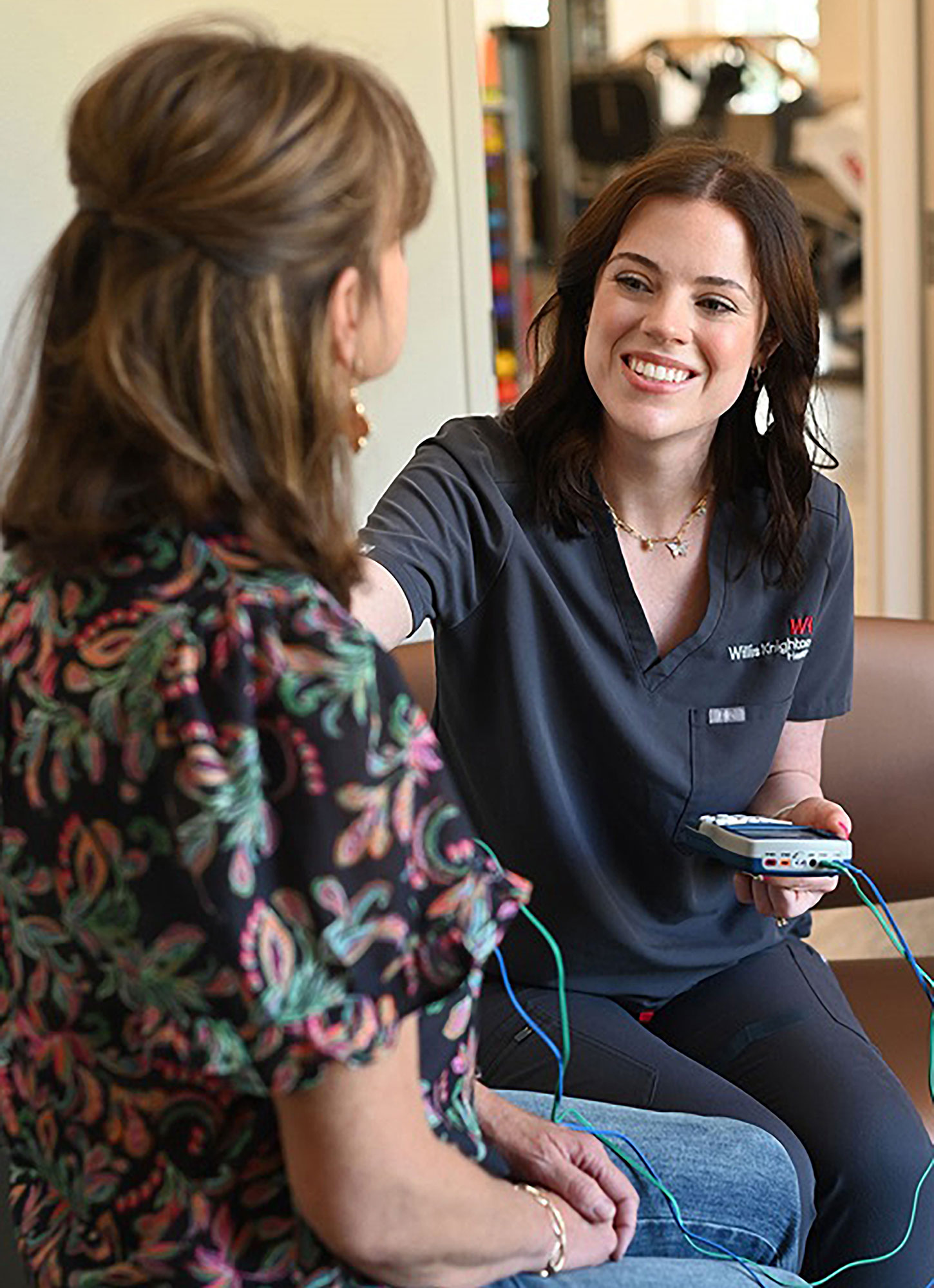
NCS - Nerve Conduction Study
This test sends a very mild electrical impulse through your nerve to measure how quickly the electrical signals travel. It's a simple and painless way for your doctor to check how well your nerves are working.
Learn more about NCS - Nerve Conduction Study
Neurointerventional Biplane
Minimally invasive procedures use this technology for advanced diagnosis and treatment of stroke, brain and spinal tumors, brain aneurysms, and other neurological conditions.
Learn more about Neurointerventional Biplane
Globus ExcelsiusGPS
This technology is used exclusively for spinal or sacroiliac (SI) joint fusion. This robotic arm has a superior range of motion with a smaller incision and smaller scar. Minimally invasive spine surgery often allows patients to go home the same day and have a faster recovery with less postoperative pain and fewer complications than traditional spine surgery.