

Play
Video

Symptoms & Risk Factors

Venous Disease Symptoms

When you experience regular symptoms of venous (vein) disease, our doctors are ready to relieve your pain and discomfort:

  • Swelling in your legs or ankles
  • Pain in your legs or ankles, especially when you stand
  • Heaviness or aching in your legs
  • Itching legs
  • Noticeable veins in your legs (beginning with spider veins)
  • Thickening and/or darkening of the skin on your legs
Venous Disease Risk Factors

Did you know your stage of life and even your lifestyle can put you at risk for venous disease? You may be at a greater risk if you have these risk factors:

  • Age 50+
  • Previous blood clots
  • Family history of vein disease
  • Smoking
  • Obesity
  • Cancer
  • Sedentary lifestyle (sitting for extended periods of time)
  • Varicose veins
  • Pregnancy

Spider Veins

Spider veins are small, dilated blood vessels that often appear on your legs or face in a web-like pattern. While they are usually harmless, many people find them bothersome or unsightly and they can sometimes cause some discomfort. If you’re concerned about them, we’re here to help you explore treatment options.  

Varicose Veins

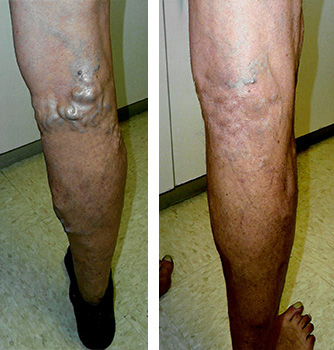
Varicose veins are swollen, twisted veins that often appear bulging or rope-like, typically on the legs. While they can be uncomfortable and cause pain, they can also lead to more serious problems, like bleeding or blood clots, if left untreated. Our vein specialists are here to help you find medical solutions so you can feel better, reduce discomfort and prevent complications. We’ll work with you to create a treatment plan that fits your needs and improves your quality of life. 

Veins

Learn more about varicose veins

Lymphedema

Lymphedema is swelling in an arm or leg caused by a blockage in the lymphatic system. While some patients may feel discomfort or pain along with the swelling, others may not experience any pain at all. Our doctors can help you manage this condition and find treatment options for you. 

Deep vein thrombosis (DVT)

Blood clots can sometimes form in a deep vein, often in the leg, and this is called “deep vein thrombosis,” or DVT. Common signs to watch for include sudden leg pain, swelling or a change in color, like your leg turning red or purple. If a clot breaks loose, it can travel to the lungs and block blood flow, which is called a pulmonary embolism – a serious condition that requires immediate attention. If you’re experiencing any of these symptoms, it’s important to seek medical help right away.

Learn more about DVT

Venous insufficiency

Some people have a vein problem when blood has trouble flowing from your legs back up to your heart. When blood starts to pool in your legs, it can cause swelling and feel painful. Willis Knighton doctors have the expertise to help you find the right treatment to improve circulation and relieve symptoms. 

Venous leg ulcers

When you have serious issues with your leg veins, it can lead to wounds that take longer to heal because of poor blood circulation. If you’re dealing with slow-healing sores or discomfort, our doctors help improve your circulation and get you on the path to healing. 

Pulmonary embolism (PE)

When a clot breaks loose and travels to the lungs to block blood flow, it’s called a pulmonary embolism (PE). This is considered a medical emergency that needs prompt attention. Common symptoms of PE include sudden shortness of breath, cough, chest pain while breathing, and sometimes nausea or vomiting. If you experience any of these symptoms, it’s important to get medical help right away. 

Learn more about PE

Peripheral vascular disease (PVD, PAD)

Arteries supply blood to your legs, arms and vital organs. When these arteries become narrowed, it reduces blood flow to your limbs, a condition called peripheral arterial disease (PAD). Common symptoms of PAD are weakness, numbness, heaviness, tired legs and calf cramps. If left untreated, PAD can lead to the need for amputation. Risk factors for PAD include smoking, diabetes, high blood pressure, high cholesterol and family history. If you have any of these symptoms or risk factors, talk to your doctor today. 

Learn more about peripheral vascular disease (PVD, PAD)

Teacher
Get Started

Contact Us

One call to Willis Knighton Vein & Artery Center links you to the right doctor who can improve your blood circulation. Call us at 318-212-8346 (VEIN) (FAX - 318-212-8375) or request a call by clicking the link below.

Subscribe to Our Healthy Hearts Newsletter

Tips to risk the reduce of heart disease and prevent, information on new therapies and treatments, heart healthy recipes and more.

Subscribe to Our Healthy Hearts Newsletter